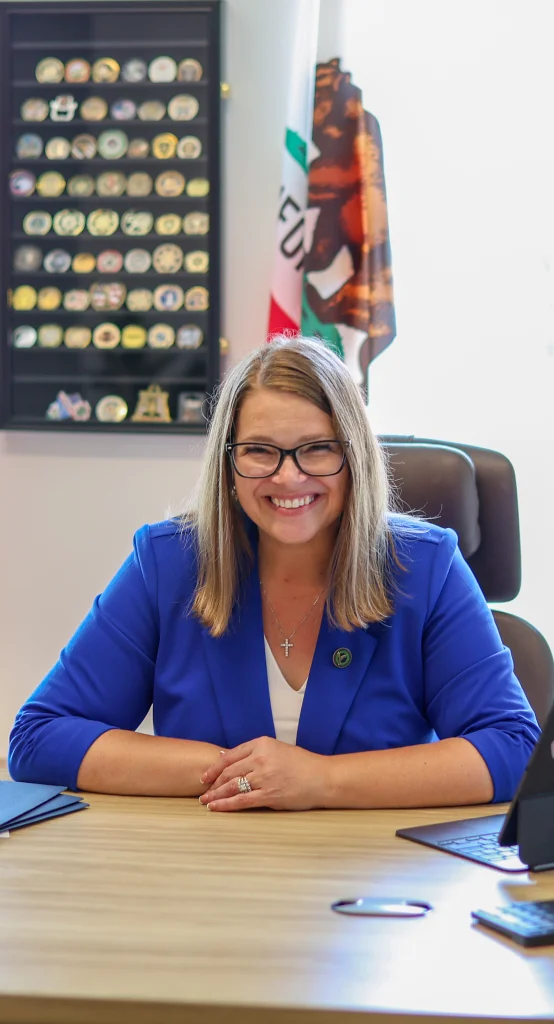
Representing District 1 including Alpine, Amador, El Dorado, Lassen, Modoc, Nevada, Placer, Plumas, Shasta, Sierra, Siskiyou counties.
In this Q&A, Assemblymember Heather Hadwick reflects on the water challenges and opportunities facing rural Northern California. Drawing on her experience as a farmer and former emergency management professional, she highlights the importance of local leadership, long-term water investments, and practical solutions that support communities, agriculture, and natural resources.
Q: You represent one of California’s largest and most diverse rural districts. What are the biggest water-related opportunities and challenges you hear about from your constituents?
Hadwick:I represent eleven counties—from the Oregon border to Lake Tahoe—and every one of them depends on water. I grew up in rural California, I ranch today, and before I was elected I worked in emergency management. I’ve seen firsthand what happens when we don’t plan ahead.
The biggest challenge I hear is uncertainty. Farmers, ranchers, timber operators, and small communities simply want reliable water for generations to come.
I spend a lot of time bringing legislators into my district because you can’t understand rural California from a committee hearing in Sacramento. Once people stand in a meadow, visit a ranch, or walk through a forest restoration project, the conversation changes. Relationships matter, and education matters.
Water isn’t a Republican issue or a Democrat issue—it’s a California issue. And the best solutions don’t come from Sacramento. They come from listening to the people who live with these challenges every single day.
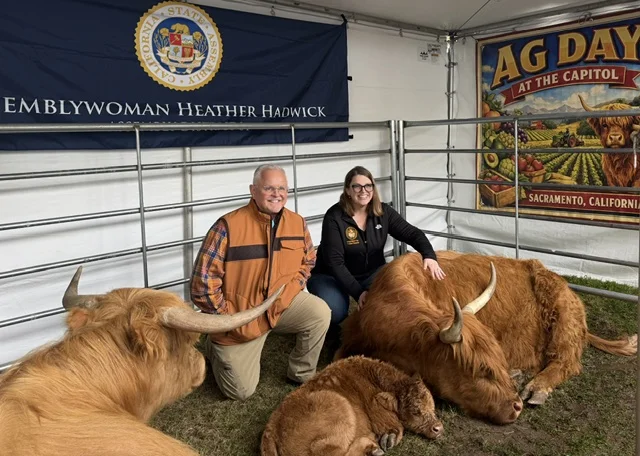
Assemblymember Heather Hadwick at Ag Day at the Capitol with Assemblymember Tom Lackey, and three of Asm. Hadwick’s Highland cows.
Q: Much of California’s water infrastructure was built by previous generations with a long-term vision. What responsibility do we have to invest in water for future generations? What investments do you think will be most critical in the next decade?
Hadwick: The people before us built water infrastructure that we’re still benefiting from today. They weren’t thinking about the next election—they were thinking about the next generation. We owe Californians that same vision.
We need storage, conveyance, groundwater recharge, forest health, and modern infrastructure. California knows how to build. We just have to decide to do it.
Q: Groundwater recharge projects are capturing water during wet years for use during dry ones. What role do you see these locally driven efforts playing in California’s water future?
Hadwick:Local solutions are almost always the best solutions. The people who live there know their watersheds better than anyone. Groundwater recharge allows us to capture water during wet years for use during dry years. The state’s role should be to support local innovation—not replace it.
Q: Floodplain restoration projects are helping improve habitat, reduce flood risk and support agriculture. Why do you think these multi-benefit projects are gaining momentum?
Hadwick: Rural California has almost had to become innovative out of necessity. When you have limited resources, you learn to think outside the box and find solutions that accomplish multiple goals at once.
One of the most impressive flood mitigation projects I’ve seen was the Clark County Shooting Complex in Las Vegas. Most days it’s a busy national shooting complex serving hundreds of people. During major storm events, because it’s county-owned and strategically designed, it becomes part of the community’s floodway and helps protect homes and businesses from flooding.
That’s exactly the kind of creative thinking we need. The best projects don’t force us to choose between public safety, recreation, conservation, and agriculture—they accomplish several objectives at the same time.
Q: Healthy Rivers and Landscapes takes a science-based approach to improving river health through both river flows and habitat improvements. How important is it for California to invest in these kinds of innovative solutions? What are some other innovative solutions you see on the table that the state should invest in?
Hadwick: Science matters, but so does common sense. My district is unique, and what works in one part of California doesn’t always work somewhere else. One-size-fits-all usually fits nobody in rural California.
Rural California has been thinking outside the box for decades—mostly out of survival. We need solutions that local communities control and choose. Trust the locals. They know their communities, their rivers, and their watersheds better than anyone. They are the experts on their own communities.
The state’s role is to provide resources and flexibility, not prescribe one solution from Sacramento.
Q: Your district depends on agriculture, forestry and natural resources. How do healthy working landscapes support both the economy and the environment in your district?
Hadwick: Working landscapes are some of California’s greatest conservation success stories. Ranchers, farmers, and foresters are protecting habitat, reducing wildfire risk, maintaining healthy watersheds, and supporting rural economies all at once. Supporting working lands means supporting both our economy and our environment.
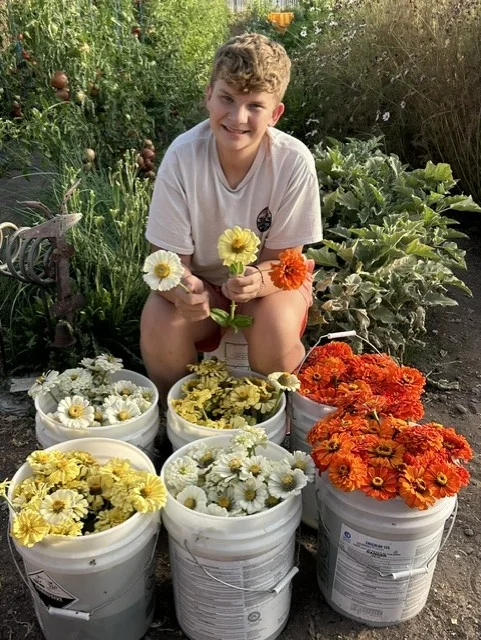
Assemblymember Heather Hadwick’s son, Zack, helping on the farm preparing flowers for market.
Q: Water policy can be highly technical, yet it affects every Californian. How do you help connect these complex issues to the everyday lives of the people you represent?
Hadwick: I make it personal. Water isn’t just a policy discussion. It’s groceries, jobs, firefighting, family farms, and whether our kids can stay in rural communities. When people understand that, water policy becomes real.
Q: Sites Reservoir will be California’s first major reservoir in nearly 50 years and the state’s first large off-stream reservoir. What does a project of this scale mean for California’s long-term water resilience?
Hadwick: Sites Reservoir represents something California needs more of: thinking long-term again. It’s not the only answer, but it’s an important part of building drought resilience, capturing water during wet years, and preparing California for the future.
Q: Can you share an example of how collaboration has led to a better outcome on a water issue?
Hadwick: Water will always be fought over, but the best outcomes I’ve seen have come through partnerships built on trust.
People in my district are understandably cautious about government, but they’re incredibly informed, passionate, and vocal about what their communities need. They know their watersheds better than anyone.
The Hadwick Family Farm Pumpkin Patch in Modoc County, CA.
One advantage of rural California is that we’re small enough to bring the right people together quickly. We know the players. We know the decision-makers. That allows us to solve problems faster.
Some of our biggest successes have come from standing together to improve—or stop—policies that would have harmed our water users. There will always be threats to our water, but if we continue building relationships, educating my colleagues, and making sure everyone has a seat at the table, we’ll continue protecting rural California.
Q: Looking ahead, what water issue deserves more attention from policymakers and the public?
Hadwick: We need to stop treating water, forests, and wildfire as separate conversations. You can’t have healthy forests without healthy watersheds, and you can’t have healthy watersheds without healthy forests.
My background is in emergency management, and one of the first things you’re taught is that disasters are far cheaper to prevent than they are to recover from. Yet California still spends far more reacting to catastrophic wildfires than preventing them.
The ripple effects are enormous—water quality, emissions, logging, economic stability, wildlife habitat, and public safety. We’re spending billions recovering from disasters while arguing over millions that could prevent them.
We have to become proactive instead of reactive.
Q: What gives you the most optimism about California’s water future?
Hadwick: What gives me hope are the people. Every week I meet ranchers, farmers, irrigation districts, conservation groups, and local leaders solving problems together.
I’ve always believed the best ideas don’t start in Sacramento. They start around kitchen tables, in irrigation district meetings, on ranches, in county board rooms, and out in the field.
Water isn’t a Republican issue or a Democrat issue—it’s a California issue. And the best solutions don’t come from Sacramento. They come from listening to the people who live with these challenges every single day.
The Hadwick Family — (left to right) front row: Shayla, Heather holding grandbaby, Laniah; back row: Bryon, Zack and Sam.