






By David Guy and Jim Peifer
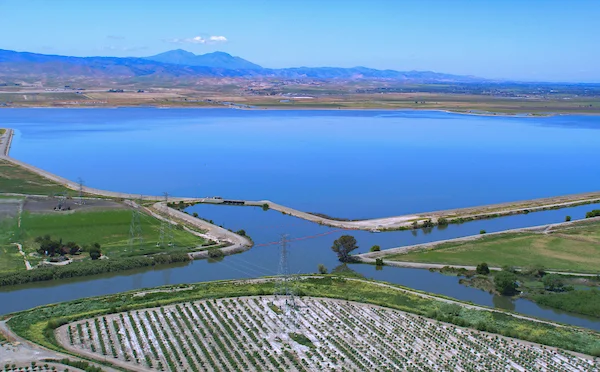
As Jim Mayer and Michael Saunders recently wrote in Mavens Notebook (Recharge the Valley: Why California’s Future Depends on Groundwater), groundwater recharge is an essential part of California’s long-term water strategy. To help scale up groundwater recharge, Assembly Member Aguiar-Curry is leading AB 2026, which has been shaped by the SacRecharge Working Group and builds on years of technical analysis among Sacramento Valley water managers, the California Department of Water Resources (DWR), engineers, hydrologists, and other technical experts demonstrating how groundwater recharge can be expanded while protecting downstream water rights, the operations of the State Water Project (SWP) and Central Valley Project (CVP), the environment, and Tribal interests. AB 2026 will not expand water use by farms or cities. Rather it is a climate adaptation strategy designed to protect our communities and reduce shortages and conflict that will inflict economic and environmental harm.
Water Is Available During Wet Seasons
Years of technical analysis have confirmed that significant volumes of water are available for groundwater recharge during winter and spring storm events.
The Public Policy Institute of California in its 2023 priorities report, Stewarding the Wet Years, noted that while California has made important progress preparing for a hotter, drier future, equal attention should be given to managing wet years more effectively. The report added that groundwater recharge can benefit agriculture, cities and wildlife simultaneously. PPIC subsequently published a report How Much Water is Available for Groundwater Recharge in the Central Valley?
In 2023 alone, approximately 11 million acre-feet of water was potentially available during winter and spring storm events. For comparison, Folsom Lake holds about 1 million acre-feet when full.
This does not mean water is always available for diversion, or that it can be diverted without limits. Rather, it demonstrates that there are recurring periods during wet seasons when groundwater recharge can occur while maintaining important protections for rivers, downstream users and the Delta.
Modernizing Recharge Criteria
The State Water Board’s existing 90/20 method has provided a streamlined approach for groundwater recharge diversions, but it has also limited recharge opportunities and can be difficult to implement under real-time operating conditions.
AB 2026 includes an alternative wet season recharge approach that expands groundwater recharge opportunities while maintaining and increasing important safeguards.
Under the proposed approach, groundwater recharge would occur only under clearly defined conditions that all must be met. Key safeguards include:
- Diversions begin only when cumulative water-year flows exceed the 80th percentile and stop when cumulative flows fall below the 50th percentile.
- Recharge is limited to the December through March wet season.
- Diversions are capped at 20 percent of daily flow.
- Operations are informed by the California Environmental Flows Framework to help protect river ecosystem functions.
The result is a more practical approach that uses real-time hydrology to capture water when it is available without compromising beneficial uses.
Protecting Delta Conditions and Water Supplies
Protecting existing water users remains a central component of AB 2026. Sacramento Valley water leaders worked closely with State and Federal water contractors to develop provisions that enhance groundwater recharge opportunities while protecting SWP and CVP operations.
Technical analyses show that Sacramento Valley diversions can occur during many Delta excess conditions without affecting State or Federal project supplies. Together, Delta excess conditions and excess conditions with restrictions occur on approximately 49 percent of winter days between November and March.
These findings demonstrate that groundwater recharge can strengthen regional water resilience while protecting downstream water rights and project operations, as well as the water supplies that support communities.
Supporting Functional Streamflows and the Environment
Groundwater recharge is more than a water supply strategy. Healthy aquifers are connected to healthy rivers, landscapes and communities.
Leaders in the Sacramento Valley are committed through various collaborative efforts to a holistic approach to salmon, birds, and other wildlife, as well as enhancing aquifers as natural infrastructure. In this spirit, the proposed recharge criteria incorporate key concepts from the California Environmental Flows Framework, a science-based approach developed through the University of California, Davis to help protect river ecosystem functions. We have also seen that enhanced groundwater recharge will help improve functional streamflow conditions for the environment and groundwater-dependent ecosystems. (see Groundwater Recharge Benefits More than Groundwater.)
Without action to scale up recharge, aquatic and groundwater-dependent ecosystems will be increasingly stressed and suffer. Capturing water during wet periods helps strengthen water supplies for farms, cities, wildlife refuges and managed wetlands while supporting the long-term health of California’s ecosystems.
A Strong Technical Foundation for the Future
The technical work supporting AB 2026 reflects years of collaboration among state agencies, local water managers, engineers and scientists working toward a common goal: making better use of California’s wet seasons. The legislation establishes a ten-year framework to expand groundwater recharge while continuing to evaluate performance across different hydrologic conditions and improve future management.
Groundwater recharge is one of California’s most affordable and effective opportunities to build long-term water resilience and will be one of the key elements in the next California Water Plan. By capturing water when it is abundant and storing it underground for future use, AB 2026 provides a practical path supported by years of technical analyses that strengthens water reliability while protecting rivers, landscapes and communities across the Sacramento Valley.
*****
For more details on the technical work described, please see: Technical Support for Groundwater Recharge and AB 2026 in the Sacramento Valley.



There is a huge opportunity for ground water recharge in both urban and suburban new construction projects.
Construction projects are required to spend large sums of money to simplify delay the discharge offsite to storm systems.
This money should be used in onsite recharge systems that are commercially available and in use in California.
It’s a missed opportunity that already exists and should be adopted and implemented. These systems can be installed and monitored to ensure that the aquifer is improved and not harmed.