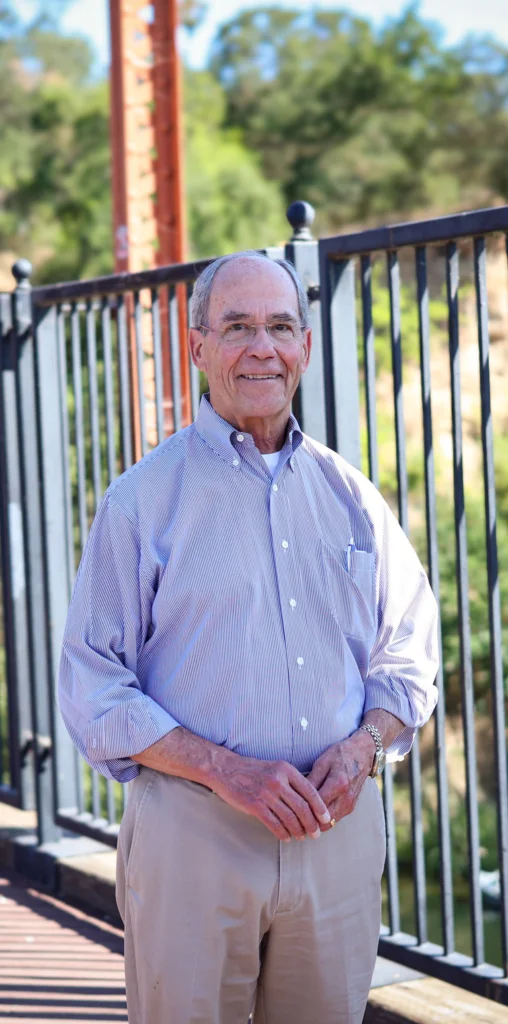
Representing California’s 6th Senate District, including portions of Sacramento and Placer counties
In this Q&A, Senator Roger Niello shares his perspective on water challenges and opportunities facing the Sacramento region and California. Recently selected to become Senate Minority Leader following the November 2026 election, Niello discusses groundwater management, flood protection, water storage and infrastructure and the importance of collaboration in advancing California’s water future.
Q: You represent much of the Sacramento region, where reliable water supplies and flood protection are essential to strong communities and economic growth. From your perspective, what are the biggest water-related opportunities and challenges facing the region?
Niello: One of our biggest opportunities is groundwater management. Our region is well ahead in this area, with groundwater management entities north and south of the American River that grew out of the Water Forum. This puts us in a good position to maximize our supplies through better groundwater management.
Flood control remains one of our biggest challenges. We have made significant improvements at Folsom Lake and throughout the region, but California has a drought climate that can also bring tremendous flows during major storms. Those deluges coming out of the Sierra can be difficult to manage.
Flood control and water supply are two sides of the same coin, but they can also work against each other. Reservoir operators may need to release water in anticipation of a major storm, and if that storm doesn’t materialize, you’ve lost water that otherwise could have been stored. It’s a delicate balance.
Q: As California experiences more frequent droughts and floods, how important is it to invest in projects that capture excess water during wet years, including groundwater recharge and expanded water storage?
Niello: Groundwater management is an important and sometimes underappreciated part of water management. In parts of the Central Valley, groundwater basins have been significantly depleted, creating serious challenges, including land subsidence. Our region has avoided some of those problems through active groundwater management.
Groundwater is as important a water management tool as additional surface storage, but I believe we also need more storage. Sites Reservoir is an important step, but I don’t think Sites alone is enough.
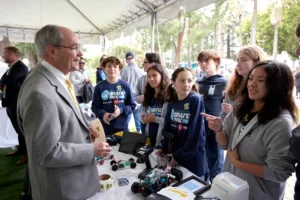
Senator Niello speaking with local students
Q: Floodplain restoration projects help improve fish, bird and other wildlife habitat, reduce flood risk and support agriculture. Why is it important for California to invest in these kinds of multi-benefit projects, and what more can the state do to support them?
Niello: Flood protection and environmental enhancement can go together quite well. As we improve flood control along rivers in our region, we should look for opportunities to improve habitat for fish and wildlife at the same time we strengthen levees and other infrastructure.
But we also need to place a higher priority on infrastructure. Senator Eggman and I authored legislation in 2024 proposing a bond focused on increasing flood protection in Central Valley communities. It was ultimately incorporated into the 2024 climate bond, but the flood-control funding was reduced significantly from what we had proposed.
That reflects a broader concern I have about the priority California places on long-term infrastructure needs. Investing in projects that can strengthen flood protection while also improving habitat and providing other benefits is a good example of how we can make those infrastructure dollars work harder.
Q: Healthy Rivers and Landscapes combines the latest science, engineering and technical analysis with river flows and habitat improvements to improve river health. How important is it for California to invest in these kinds of solutions? What other innovative approaches should the state invest in?
Niello: Those of us who believe we need a greater emphasis on infrastructure also recognize that environmental considerations are an important part of those efforts. I believe those goals can be compatible. It is important to address environmental needs along our rivers while also improving water supply and infrastructure.
Folsom is a good example. Modifications were made to allow colder water to be released from deeper in the reservoir, benefiting salmon that depend on cold water. That is the kind of approach that allows us to operate and improve infrastructure while also addressing environmental needs.
Q: Sites Reservoir will be California’s first major reservoir in nearly 50 years and the state’s first large off-stream reservoir. What does a project like Sites mean for California’s long-term water reliability and environmental resilience?
Niello: Sites Reservoir is, in some ways, similar to groundwater management. It takes water off-stream and stores it so it can be used when needed, filling during wet years and providing water during dry years.
Sites will create additional storage capacity and greater flexibility for managing flows in the Sacramento River system, including tributaries such as the Feather and American rivers.
The fact that this will be California’s first major reservoir in nearly 50 years underscores why I believe we still need more water storage. Sites is very important, but we should continue looking for opportunities to expand storage.
Q: Many of California’s most successful water efforts have been driven by local and regional partnerships. Can you share an example of collaboration leading to a better water outcome?
Niello: The Sacramento Water Forum is a great example. I became involved when I was running the Sacramento Metropolitan Chamber of Commerce in 1995 and participated for about seven years.
At the time, the region had reached something of a gridlock over proposals to take more water from Folsom Reservoir or the American River. The Water Forum brought together representatives from the environmental community, business community, water providers and neighborhood interests to find a path forward.
After years of work, we ultimately agreed on two co-equal objectives: providing a reliable water supply for the region and improving the environment of the lower American River. The agreement proved far more durable than I expected when we signed it, and that collaborative approach continues today.
Q: Water policy often requires balancing environmental, economic and community needs. How do you approach finding practical solutions that bring people together around shared goals?
Niello: One of the most important lessons I took from the Water Forum was the value of interest-based negotiation. The approach asks people with very different views to understand their fundamental interests rather than simply defend their positions, and then look for areas where those interests overlap.
One experience has always stuck with me. After the environmental and water caucuses met on an issue, the environmental caucus wasn’t present to report back. Einar Maisch, who was with Placer County Water Agency at the time, volunteered to articulate their perspective, and he did it extremely well because everyone had spent so much time listening to and understanding one another.
That illustrates why this approach works. When groups understand one another’s underlying interests, there is almost always some overlap, and that can produce a stronger outcome than if only one side gets its way.
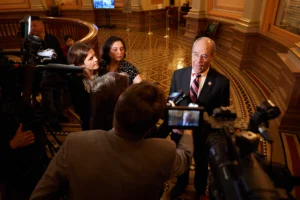
Senator Niello answering questions from reporters at a press conference
Q: Water policy can be highly technical, yet it affects every Californian. How do you help connect these issues to the everyday lives of the people you represent?
Niello: Water is one of the most complicated issues I have ever worked on. If you ask people where they get their water, a lot of people will simply say, “It comes out of the tap.” You have to help people understand the tremendous amount of work and infrastructure that comes before that.
Water is also a scarce resource in California. One issue we dealt with through the Water Forum was expanding the use of water meters throughout the region. I became convinced that broader use of meters was necessary so people would pay based on what they use and have an incentive to conserve.
It takes time to explain both the cost of getting water from its source to someone’s tap and the importance of carefully managing a limited resource.
Q: Congratulations on your recent selection to serve as Senate Minority Leader following the November election. As you take on this broader leadership role, how do you hope to elevate water as a statewide priority and advance lasting solutions to California’s water challenges?
Niello: A reliable water supply is fundamental to California’s economy and quality of life. As Senate Minority Leader, I want to keep the focus on practical, long-term solutions that allow our communities, agriculture and businesses to thrive while meeting our environmental responsibilities.
That means investing in water infrastructure, increasing storage projects like Sites Reservoir, improving groundwater recharge and flood protection, and making sure regulatory processes allow good projects to actually move forward. California has the resources and ingenuity to address our water challenges. We need to prioritize investments that deliver results and provide greater certainty for families, businesses and communities across the state.
Q: What gives you the most optimism about California’s water future?
Niello: California fundamentally has a drought climate, but it is punctuated by periods of tremendous rainfall and runoff. That makes our water system particularly difficult to manage, and climate change appears to be exacerbating those extremes.
Understanding that challenge also gives us the ability to better manage this resource. If we recognize the reality of our climate and weather patterns, we can develop the infrastructure, storage and management strategies needed to adapt.
I remember a Democratic colleague once joking that it would be interesting to watch conservatives come to terms with climate change in order to address changing water flows. I responded that it would also be interesting to watch liberals come to the realization that climate change strengthens the case for additional water storage.
That exchange has always stuck with me. People may approach an issue from very different perspectives, but recognizing the underlying challenge can create an opportunity to find common ground and develop practical solutions.
Senator Niello serving as a celebrity waiter at a charity event