



The following is an excerpt from Roger Cornwell’s chair remarks at the NCWA Annual Meeting on March 6, 2026 at Sierra Nevada Brewery in Chico.
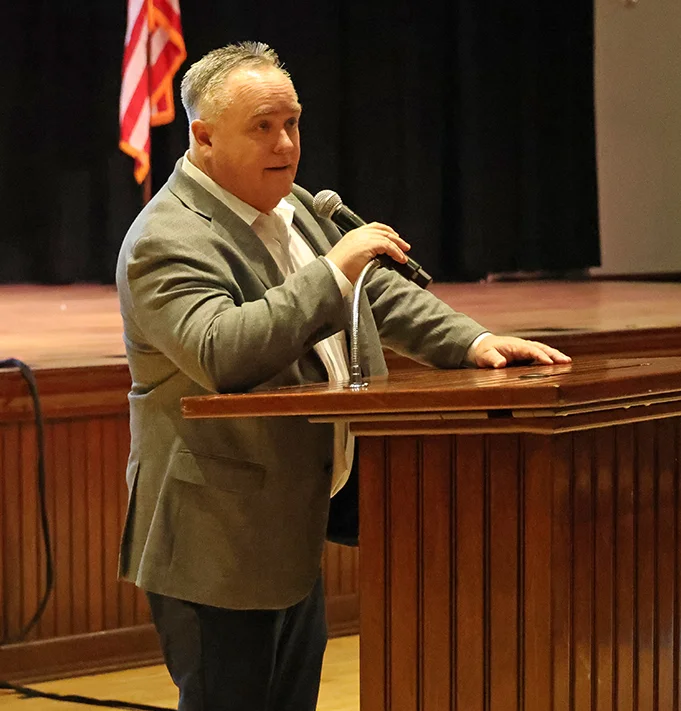
It is truly an honor to stand with you today—among the people who steward one of the most extraordinary landscapes in the world.
The Sacramento Valley is more than a place on a map.
It is the source.
- The source of water that feeds our communities, farms, wetlands, and wildlife across California.
- The source of rivers that sustain salmon runs older than our state itself.
- And the source of leadership—leadership that is now more important than ever.
Because the future of California water will be determined by whether we have the ability to build stability in our water system—stability rooted in our healthy rivers, landscapes, and communities.
The NCWA Board of Directors met several weeks ago in Colusa to discuss our strategic priorities. We have a five-year strategic priorities adopted last year, which included your input from throughout the region. We are building on this in 2026—let me highlight a handful of our priorities for this year.
1. Healthy Rivers and Landscapes

Vitalizing healthy rivers, landscapes, and communities is our goal for this region. We need to get the Healthy Rivers and Landscapes Program across the finish line this year with the State Water Board.
We have been working for many years to develop the Healthy Rivers and Landscapes Program (once known as the VAs) as a better alternative to the State Water Board proposal to redirect 1 million acre-feet of water away from this region.
This program is the foundation for water supply reliability and the Bay-Delta for the next decade. This program is the foundation for continuing trust across the water community.
Thank you all for rolling up your sleeves to get this program adopted and ready for implementation. To quote the great philosopher Larry the Cable Guy, let’s “Get Er Done!”
2. Meeting the Reality of Dry Years—with Wisdom and Resolve

We know the facts.
Dry years are no longer rare.
They are part of our reality.
And yet, here in the Sacramento Valley, we are not standing still—we are leading.
Let’s start with the amazing work throughout this region to re-manage flows that will bring stability to our respective rivers and creeks, particularly during the drier years. Within the past year, we have seen various programs approved—the Drought Protection Program on the Sacramento River, the extension of the Yuba Accord on the Yuba River; the Water Forum Agreement on the American River, and the implementation of the Putah Creek Accord with the right habitat to support. Congratulations to all of you on your rivers and creeks—these arrangements will provide surface water stability to this region for the next decade—helping fish and wildlife while ensuring water supplies for our communities and farms.
In preparing for the next dry period, we are working with the State Water Board to help them better administer the water rights priority system—the backbone of our region and California water—with integrity and in an orderly manner that makes the water rights priority system work.
Because in difficult times, our work together builds trust.
And trust builds stability.
It is part of our stewardship ethic.
3. Floodplain Forward: Reawakening the Landscape

Perhaps nowhere is our vision clearer than in Floodplain Forward. This effort is doing something remarkable. It is reawakening the landscape and we are changing the conversation around the management of our water resources.
For generations, we confined our rivers. We separated water from land. But today, we are bringing them back together. We are reconnecting rivers with their floodplains. Water on the landscape has worked well for farming in the region for 150 years. We are now putting water on the landscape in the fall for birds and the winter for salmon.
We are recharging groundwater.
We are protecting communities.
We are proving that the Sacramento Valley can lead California into a new era—an era where nature and people thrive together. Where farming and our communities can thrive in harmony with fish and wildlife—not fighting against each other.
Floodplain Forward is more than a program. It is an agent of change, showing what is possible when we work with our land—not against it.
4. Building the Future: Sites Reservoir

Vision also requires action. Completing Sites Reservoir is one of the most important steps we can take to prepare for the future.
Sites represents foresight.
It represents resilience.
It represents our willingness to invest in the next generation.
It will capture water when it is abundant—and make it available when it is scarce.
Just as those before us built the amazing reservoirs across this region to serve generations they would never meet—we now have the responsibility to build Sites Reservoir for those who will come after us. The Sites Reservoir Authority is poised for success this year.
Fritz, Jerry—we are all fully behind you to get the Sites water right approved by the State Water Board this year! This is our moment of stewardship with new water infrastructure.
5. Recharging our Aquifers

If Sites Reservoir represents how we store water on the surface, groundwater recharge represents how we store water beneath our feet. Our aquifers are the Sacramento Valley’s savings account. They are what carry us through dry years. They are what stabilize our communities and farms when rivers run low.
And today, we are learning to replenish them—not by accident—but by design. Every one of you is working with your Groundwater Sustainability Agency to balance your groundwater supplies and prepare for dry years. Each winter, when rivers run high, we have an opportunity. An opportunity to slow the water down. To spread it across working lands.
Groundwater recharge is not new to this valley. It is something this landscape has done for thousands of years. Any many of you have operated conjunctive use districts for many years. But now, we are doing it with intention and purpose at a larger scale. With partnerships with each other and the Department of Water Resources.
We are excited that Assembly Member Aguiar-Curry has introduced AB 2026. And she is working with Assembly Member James Gallagher and Senators Ashby and Cabaldon and many others. AB 2026 helps remove barriers. It helps clarify pathways to recharge. It helps ensure that when water is available in wet years, we can capture it—responsibly, locally, and efficiently—and store it underground for the future.
It is about stability. It is about ensuring that when the next dry cycle comes—and it will—this valley is ready.
6. Unify the Central Valley Project and California’s Future
The President issued an Executive Order directing water to the south on the heels of the Palisades fire.
We support and can help the Central Valley Project deliver water to the south, but we need our water rights and contracts in every part of this Valley fully honored to ensure that water can serve the Sacramento River Basin.
We need the water in the north state to serve our farms, communities, refuges, salmon and recreation.
We are working to unify with the CVP water suppliers—with a north state perspective that reflects the reality that much of California’s water begins in this Sacramento Valley and the best investments in the water projects are made here in the Sacramento Valley.
7. Protecting our Water Quality
We must continue protecting water quality through programs like the Irrigated Lands Program and CV-Salts.
We live, work and play in this Valley—clean water is the most fundamental promise we make—to ensure water for all of our communities and for our healthy rivers and landscapes.
8. California Water Plan
California is updating its Water Plan based on legislation that calls for California to include an interim planning target of 9,000,000 acre-feet of additional water, water conservation, or water storage capacity to be achieved by 2040.
This is ambitious, knowing certain regulators want to declare California fully appropriated and off limits with respect to new water.
We know the path forward is not choosing between people and nature. The path forward is embracing both and making sure we have water supplies for all beneficial uses of water.